
Updated September 2026
Panto glasses are recognised by their rounded lens shape, usually with a slightly flatter or more defined upper edge and a fuller curve underneath. They sit somewhere between a completely round frame and a more conventional oval shape, which gives them a distinctive look without being particularly difficult to wear.
The term is used quite broadly by eyewear manufacturers, so not every frame described as Panto will have exactly the same proportions. It is better to think of Panto as a family of rounded shapes rather than one rigid design.
What is a Panto Frame?
A typical Panto frame has rounded lenses with a little more width towards the upper part of the frame. The lower edge is usually deeper and more curved, giving the lenses a soft, almost circular appearance without making them perfectly round.
The bridge can vary considerably. Some Panto frames have a conventional bridge, while others use a keyhole bridge, which gives the frame a more pronounced vintage-inspired appearance.
Panto vs Round Glasses
Panto and round glasses are often grouped together, but they are not necessarily the same thing.
A truly round frame is close to circular, while a Panto shape usually has subtle differences in the upper and lower proportions. Those differences can make a Panto frame look a little less severe than a perfectly circular design.
In practice, manufacturers do not always use the terminology consistently, so the actual shape and dimensions of the frame are more useful than the name alone.
Why Has the Panto Shape Remained Popular?
Part of its appeal is versatility. The rounded shape has a recognisable retro character, but it can be made in very different ways, from lightweight plastic frames to slim metal designs.
The relatively generous lens area also works well for reading glasses because there is plenty of usable lens space for close work. At the same time, the shape is distinctive enough to offer an alternative to the more familiar rectangular reader.
Different Types of Panto Reading Glasses
Our own ready-to-wear range includes several different interpretations of the Panto shape.
The Frankie is a recycled-plastic Panto frame with a keyhole bridge and spring hinges. Its construction gives it a slightly softer, more casual appearance.
The HangOver Panto uses the same general rounded idea but adds extra-long curved temples, allowing the glasses to hang around your neck when you are not using them. This makes it quite different from an ordinary Panto reader, despite sharing the basic frame shape. The HangOver Panto is currently available in Black, Blue and Havana.
The Panto G10600 takes a much slimmer approach. It is an ultra-slim fold-flat reader in a Havana finish and is one of my personal favourites in the ready-to-wear collection.
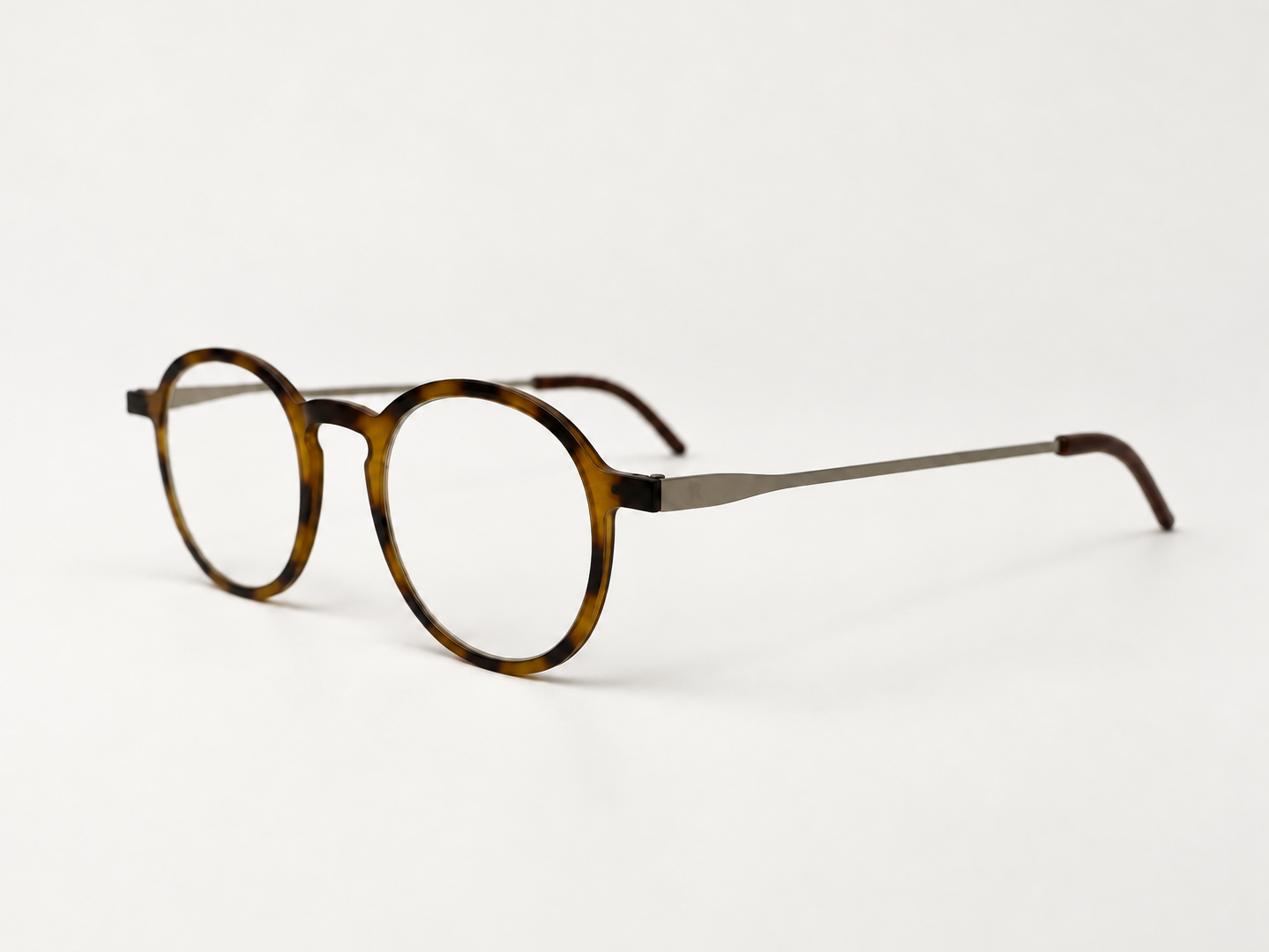
The 'Panto G10600' by I Need You combines a classic panto shape in a Havana finish with an unusually slim, fold-flat design. When folded, the glasses are just 5mm thick, making them easy to slip into a pocket or bag when you're not using them.
Lightweight stainless-steel arms keep the profile slim and make these reading glasses a particularly practical choice when you're out and about.
Design: Classic panto shape in a Havana finish.
Convenience: Folds flat to just 5mm thick.
Material: Plastic frame front with stainless-steel arms.
Brand: I Need You
Dimensions:
Frame Width: approx. 135mm
Frame Height: approx. 41mm
Plastic or Metal?
Panto frames work well in both plastic and metal.
Plastic versions often have a stronger outline and can make the rounded shape more noticeable. Metal frames tend to look finer and lighter.
Neither is inherently better. The choice is mainly about the appearance you prefer, the way the frame sits and how substantial you want the glasses to feel.
Choosing the Right Panto Frame
The name of the shape is only part of the decision. Frame width, frame height, bridge design and temple style can all affect how a pair looks and feels.
Where possible, we include our own approximate frame measurements on product pages so that you can compare one pair with another. Our Sizing Guide also explains how these measurements are taken.
If you already own a pair of reading glasses that fits you well, comparing its approximate dimensions with a new frame can be a useful starting point.
Are Panto Reading Glasses Right for You?
Panto glasses are worth considering if you like a rounded, slightly vintage-inspired frame but do not necessarily want a perfectly circular pair.
They can range from very traditional to quite contemporary, depending on the material, bridge and temple design. As with any reading glasses, comfort and proportions matter more than the name attached to the shape.